Subscribe to "Life In B Major: The Nerban Perspective" by Email

Dec 24 2009

The Vocal Minority

Published by d dot b under Logic, Social, politics

Table of contents for Litigious Behavior

  1. The Vocal Minority

The Vocal Minority

Ringing loudly from a few

A little Abstract: Simply put, minority groups – lifestyles, cultural, racial, were disadvantaged because their concerns went unheard in the general public – primarily due to the availability of distributional channels; back in the day, the only way to really rally, garner support were through newspapers, TV (if you could get the airtime), and word of mouth. In times of social unrest throughout the world, the ‘grassroots’ campaign has been the movement of choice for sparking change and voicing dissent – from the pamphlets that used to be passed around in the dens preceding the Spanish revolution to speak of injustices, to the rallies that started in the deep south in the U.S. circa 1960’s that spread across the nation – it has shown us that the minority, though small, can be very vocal in expressing their dissent.

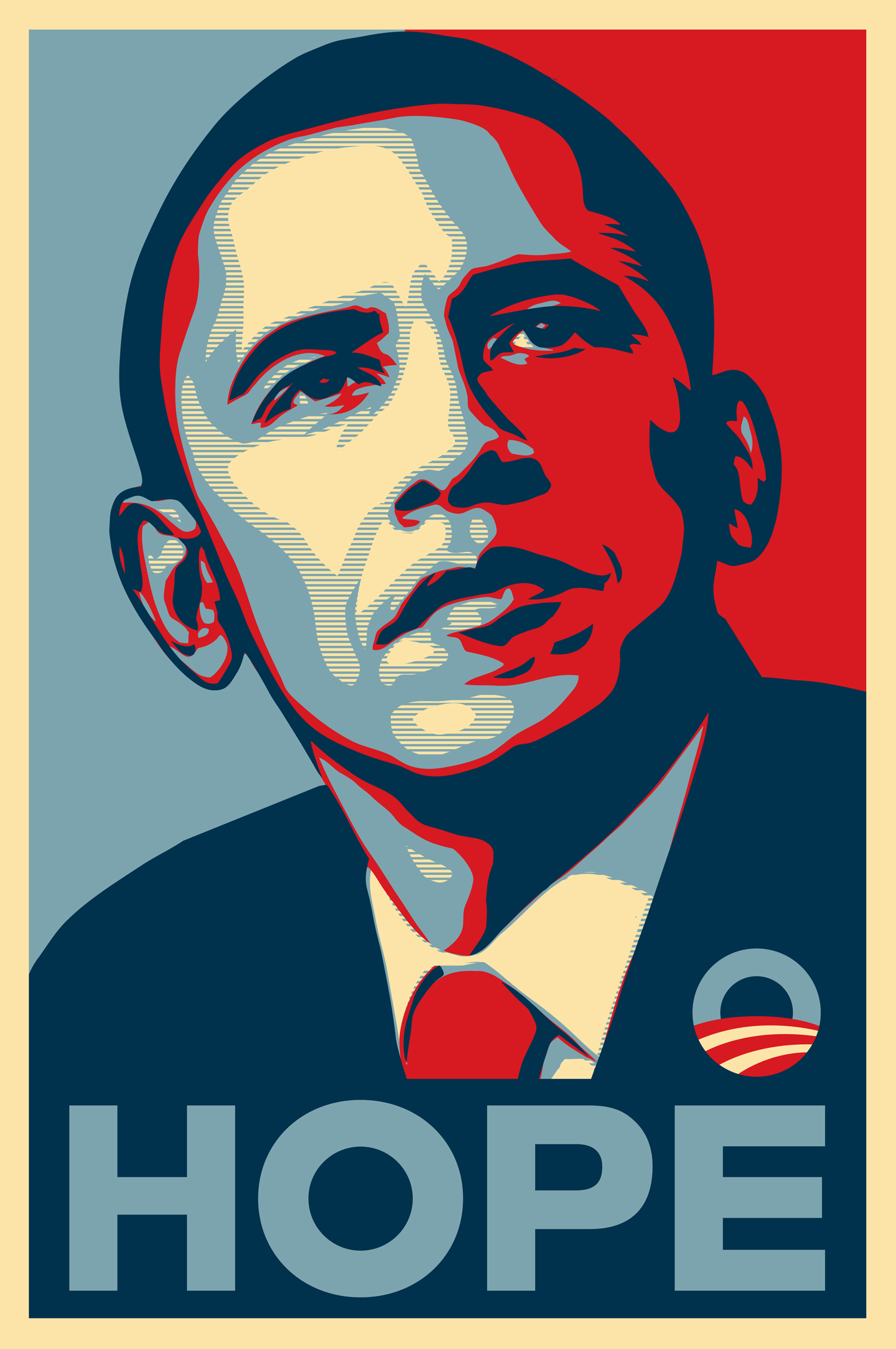
Enter the digital age with communications passing at lightning speeds; grassroots groups can now quickly spread their message around – gaining members, support, and exposure. The most recent and salient example of this would be Obama’s 2008 U.S. presidential campaign as the mastermind of his campaign utilized the power of social network’s to connect with people; the campaign was able to quickly organize rallies and spread campaign messages to thousands of people instantly. It is said that it is because of Obama’s clever use of grassroots movement ‘mentality’ that lead him to victory in the election – in an election that everyone initially thought he had no chance in winning.

Essentially, most grassroots movements focus around inequity; the imbalance of a system – and the movements try to disrupt and/or change the lifestyle of the majority. Some of the movements I support, but for some …. I don’t know. These movements are very vocal, but their cause – I can’t identify with and/or subscribe, or I just don’t get the logic in how they expressed themselves. There are even full sites that give guides and tutorials on how to start Grassroots sites (click here) with plenty of resources.

The Doubters

No need to explain what doubt is; should be a universal concept as we experience everyday in our lives. Whenever you have an event, or a belief, there will always be two points of view – the Advocators and the Doubters. Let’s examine the Doubters; specifically in the light of substantial empirical evidence. Call them ignorant, believers, or motivationally driven, these people pronounce an opposing stance in the face of adversity; such as those that don’t believe in the moon landing by NASA. Maybe call them the ‘conspirators’ actually, as they cast doubt and mystery behind many of life’s popular events; and they gain traction via social networking sites and mobile technology to amplify their belief.

I only dread as the world gets increasingly smaller with communications, that the world on a whole, will be much louder – get your earmuffs out.

No responses yet

Dec 17 2009

Common Tautologies

Published by d dot b under Logic

Rhetoric Redundancy

The common usage of tautologies in everyday language

In rhetoric, a tautology is an unnecessary or unessential (and sometimes unintentional) repetition of meaning, using different and dissimilar words that effectively say the same thing twice (often originally from different languages). It is often regarded or thought of as a fault of style and was defined by Fowler as “saying the same thing twice.” It is not apparently necessary or essential for the entire meaning of a phrase to be repeated. If a part of the meaning is repeated in such a way that it appears as unintentional, clumsy, or lacking in dexterity, then it may be described as tautology. On the other hand, a repetition of meaning which improves the style of a piece of speech or writing is not necessarily described as tautology.

“Unsolved Mystery”

- “mystery” is something that is unexplained, unknown or unsolved.

“Short Summary”

- a “summary” is a “shortened” version of a text

“Free Gift”

- “gift” is, by definition, something given without charge.

“New Innovation”

- “innovation” is defined as something new.

“digital download”

- given that downloading is the transfer of binary or digital data from a higher level system to a lower one, all downloading is inherently digital.

Hamilton Tiger-Cats

The name of the CFL’s Hamilton Tiger-Cats is tautological, since tigers are cats

Common Acronymns that are Tautologies:

UPC code (Universal Price Code)
VIN number (Vehicle Identification Number)
ISBN number (International Standard Book Number)

Some Tautological quotes:

In a 1988 campaign speech in Ohio, George H. W. Bush said, “It’s no exaggeration to say the undecideds could go one way or another

After reading up on Tautologies, I asked myself if I did this, and I believe I am a repeat offender of this. But why do we commit to these rhetorical statements? Its either due to ignorance – not knowing the true literal meaning of certain words and/or phrases; or it could be due to a desire to sound ‘witty’ and intelligent – the more words used implies a greater depth of vocabulary and knowledge. Whatever the reason is, if you are a tautological offender, stop and think about what and why you are doing it, because you may be being redundant for no apparent reason.

Sources:
Wikipedia

No responses yet

Dec 16 2009

Happy Festivus!

Published by d dot b under Popular Culture

festivus

Festivus Greetings!

Spawned from a Seinfeld TV episode in 1997 as “A holiday celebrated by those frustrated with the commercialism and pressure surrounding the Christmas/Hanukkah season”, this secular holiday seasons has gained traction and is now practiced by millions of people across the world – I am sure seriously and jokingly. But really, this holiday is interesting to me nonetheless because I am sure it expresses feelings that many of us feel during the Christmas season; with the family members, shopping tribulations, awkward social dinners & parties, and so on. One could easily dub some of the elements of the Festivus holiday with a dose of ‘reality’; as the elements allow one to get as Young Jeezy said, “As Real as it Gets”. Enter the Rituals:

Airing of Grievances

The celebration of Festivus begins with the “Airing of Grievances”, which takes place immediately after the Festivus dinner has been served. It consists of lashing out at others and the world about how one has been disappointed in the past year.
- oh man, I am sure that many secretly wish & desire that they can do this – everyone can relate to this as I am sure there are many people you want to air out, fighter jet style, to let them know what you think of them and how they have disappointed you over the year(s).

Feats of Strength

“As described in the “Festivus Book”, the head of the household selects one person at the Festivus celebration and challenges that person to a wrestling match.[8] The person may decline if they have something else to do, such as pull a double shift at work. Tradition states that Festivus is not over until the head of the household is pinned in a wrestling match.”

Other Festivus rituals include the Festivus Dinner that usually includes a subpar dinner, and the Festivus Pole; which replaces the ‘Christmas tree’ with a simple, simple, simple facsimile (minus the trimmings). There are even books and a website to support and promote this holiday (http://www.festivusbook.com/), and on YouTube many people have recorded their celebrations to share the world.

Even a company is making a business out of making a ‘Festivus Pole’, SMH

In all, I am sure the creator of Festivus, which is one of the Seinfeld writers “Dan O’Keefe”, never thought that this holiday would be what it is today, but I guess when you connect with what people are feeling, anything can happen …. Happy Festivus to all!

Sources: http://en.wikipedia.org/wiki/Festivus

No responses yet

Oct 01 2009

tan(013) – We need a Transportation Social Sheriff

Published by d dot b under Logic, Social


Designed by Tooaya

tan(013) - Transportation Social Sheriff

lost drivers, stand right & walk left, staying in one’s blindspot

Preamble: What a way to start off October with a rant, but there is no better way as many of you lame drivers and subway riders have been singing, dancing, in your own little world with no regard for others, listen up!

Lost Drivers

Tourism is good for all cities, it boosts the local economy, trade, etc. But if your from out of town, and you may not be familiar with the city, don’t drive like you are the only one on the road – at your slow turtle pace. There are certain areas of a city that are shown to have a bunch of slow drivers, and higher accident rates: specifically any landmarks or the downtown city centre, and around the airport. I understand that you are looking for some street, but going considerably below the speed limit does not only put yourself at risk, but also other drivers


Designed by Acid Pro Studio

Stand Right, Walk Left

I’m sure all my subway riders will relate to this one. The odd time I am compelled to use public transportation over driving my own car as to save commute time or to avoid expensive parking rates. On the escalator’s in the subway stations, they have a general rule for the passengers; ‘Stand right, or walk left’, which is pretty much saying ‘be courteous of others who are in a rush’. Unfortunately, this moral decency and respect for your fellow man usually does not translate to all members of society as during rush hour, you will have people standing in the left side of the escalator as they are either completely oblivious, talking with a friend, or minding their own business. When an event like this happens, most people will bite their tongue – choosing to express their disdain with their facial expressions. I on the otherhand will walk toward the insensitive lame with a polite excuse me, positioning my arm to connect with their back …


Designed by Fallakka

Staying in One’s Blindspot

For my drivers out there, don’t you dislike when another driver in the lane beside you refuses to pass you or slow down considerably enough so that they get out of your blindspot. We all know how dangerous it can be if one doesn’t know that a car is in their blindspot; it can cause serious accidents. So, please, don’t remain in someone’s blindspot, either speed up and pass them, or slow down and cruise so that the car can see you. Its common courtesy people, let’s follow it.

.:: LiBM ::.

No responses yet

Sep 14 2009

Hipsters: Then and Now

Published by d dot b under Hip-Hop, Social, Style, Swag


The Hipsters

Past and Present … Presently ….

Here is a bit of a History Lesson of where this ‘Hipster’ Fashion and culture has come from … and SHOCKINGLY, it comes from the Black Community … (that is sarcasm)

Birth of ….


1940s-1950s

“Hipster” derives from the slang “hip” or “hep,” which are derived from the earlier slang “hop” for opium. The first dictionary to list the word is the short glossary “For Characters Who Don’t Dig Jive Talk,” which was included with Harry Gibson’s 1944 album, Boogie Woogie In Blue. The entry for “hipsters” defined it as “characters who like hot jazz.” The 1959 book Jazz Scene by Eric Hobsbawm (using the pen name Francis Newton) describes hipsters using their own language, “jive-talk or hipster-talk,” he writes “is an argot or cant designed to set the group apart from outsiders.” Hipster was also used in a different context at about the same time by Jack Kerouac in describing his vision of the Beat Generation. Along with Allen Ginsberg, Kerouac described 1940s hipsters “rising and roaming America,… bumming and hitchhiking everywhere… [as] characters of a special spirituality.”


Mutation of …


1990s and 2000s
In the late 1990s, the term started to be used in new, sometimes mutually exclusive ways. In some circles it became a blanket description for middle class and upper class young people associated with alternative culture, particularly alternative music, independent rock, alternative hip-hop, independent film and a lifestyle revolving around thrift store shopping, eating organic, locally grown, vegetarian, and/or vegan food, drinking local beer (or even brewing their own), listening to public radio, and riding fixed-gear bicycles.

In 2003 Robert Lanham’s satirical book The Hipster Handbook described hipsters as young people with “… mop-top haircuts, swinging retro pocketbooks, talking on cell phones, smoking European cigarettes,… strutting in platform shoes with a biography of Che Guevara sticking out of their bags.” Hipsters are considered apathetic, pretentious, and self-entitled by other, often marginalized sectors of society they live amongst, including previous generations of bohemian and/or “counter-culture” artists and thinkers as well as poor neighborhoods of color.

Gavin Mueller’s article “Hipster or Not?” for Stylus Magazine (2004) wrote that “… hipster lifestyle is reduced to a pose, a pretense” which involves”…”a hipster costume, worn to appear “cool”, a liberal arts education, and so on. He claims that the term “‘Hipster’ is far too vague and broad to have any semblance of essential meaning”.


Current … Hipster Rap

In 2008, Utne Reader magazine writer Jake Mohan described “hipster rap,” “as loosely defined by the Chicago Reader, consists of the most recent crop of MCs and DJs who flout conventional hip-hop fashions, eschewing baggy clothes and gold chains for tight jeans, big sunglasses, the occasional keffiyeh, and other trappings of the hipster lifestyle.” He notes that the “old-school hip-hop website Unkut, and Jersey City rapper Mazzi” have criticized mainstream rappers who they deem to be poseurs or “… fags for copping the metrosexual appearances of hipster fashion.” Prefix Mag writer Ethan Stanislawski argues that there are racial elements to the rise of hipster rap. He claims that there “…have been a slew of angry retorts to the rise of hipster rap,” which he says can be summed up as “white kids want the funky otherness of hip-hop… without all the scary black people.”


Comment:

I don’t mind the Hipster fashions for the women, but when the Hipster fashions for the men look like the same fashions for the women; then there is a problem – loosen up the jeans fellas.

Sources: http://en.wikipedia.org/wiki/Hipster_(1940s_subculture)

http://en.wikipedia.org/wiki/Hipster_(contemporary_subculture)

No responses yet

Next »