
Subscribe to "Life In B Major: The Nerban Perspective" by Email

Archive for the 'Media' Category

Nov 18 2009

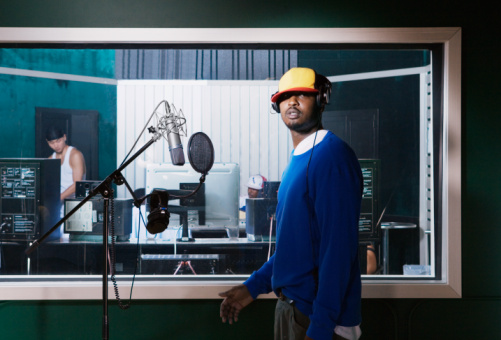
New HP Commercials w/ Hip-Hop

Published by d dot b under Hip-Hop, Media, Technology

Lupe Fiasco in new HP TV ads

HP does it again as they fulfill their spot as the second coolest brand of computers behind Apple; though I think that HP edges out Apple in the commercials.

No responses yet

Oct 14 2009

Marge Simpson Playboy Cover

Beyond 2D Imagination

Playboy’s smartest move

Marge Simpson will be on the cover for the November 2009 issue for the iconic magazine Playboy. One way to generate interest into a dying medium & publication is to blur the lines of reality – so kudos to Playboy for accomplishing buzz and pushing the imagination of many to actually contemplate what is under that green dress (insert joke here). This issue can spawn Playboy’s competitors to think of other crazy issues, such as Cartman’s mother from South Park in Hustler, or even Lois from the Family Guy — the sky is the limit.

Here are also some other interesting derivations of the iconic cartoon mother


Designed by Elton Pot


Designed by Strike Force


Designed by Steve PR

.::LiBM::.

2 responses so far

Oct 06 2009

Women in Mainstream Film

Published by d dot b under Media, Relationships, Social

Women in Mainstream Film

Women’s studies mash up from Brett Dan n Jacob on Vimeo.

I thought these guys did a pretty good job in identifying gender stereotypes in popular films. Kudos, but they didn’t really offer a solution, but c’est la vie.  A good watch rather than watching some gangsta try to shoot up Youtube.

No responses yet

Jun 30 2009

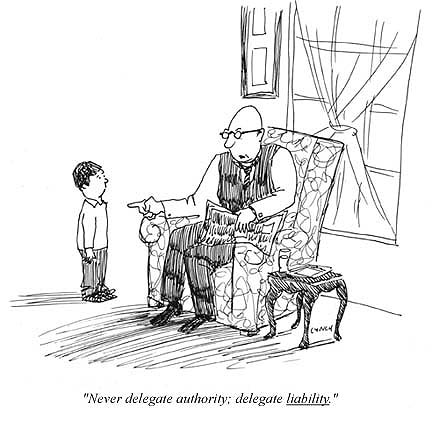
Authority Figures and the Social Media World

Published by d dot b under Logic, Media, Social

Authority and the Social Media World

 
It may have been said best by Bertrand de Jouvenel:
“The phenomenon called authority is at once more ancient and more fundamental than the phenomenon called state; the natural ascendancy of some men over others is the principle of all human organizations and all human advances.”

All societies operate on the concept of authority; as some figure or body of government has the ability and power deliver punishment on individual(s). Since the Roman civilization, authority is used as a deterrence and an instrument of justice; punishing those that break the laws of a society. In contemporary society as it relates to the rule of law, an authority figure would be law enforcement, military, intelligence services – and as we have seen in certain countries, the use of power in punishing others can be very relenting, and even the legitimacy in the authority figures and its ideology can be questioned and revolted by a society (i.e. Iran). However, without a body to enforce the rules and order of a society, then chaos is sure to arise as man can not govern itself freely. There are several differing types of authority according to German Max Weber, they are Rational-legal, traditional, and charismatic.

Social Media Urban Context

“Modern societies depend on legal-rational authority. Government officials are the best example of this form of authority, which is prevalent all over the world.”, however this type of authority is not respected much by the growing industry of ‘Social Media’, as governments find it increasingly difficult to regulate the Internet – the most prime example is the government in Iran who have failed to block certain social media sites; as the people in that country have used technology, specifically the use of IP Proxies, to get around the government crackdown. In Western countries, governments try to establish rules and laws, however much of the enforcement is scattered and not effective as there are many socially unacceptable sites dealing with underage exploits.

Traditional authority, which derives from long-established customs, habits and social structures. When power passes from one generation to another, then it is known as traditional authority”, as it relates to social media, this is a toss-up: on the one hand it seems that the Internet community on a whole has some group personality traits; groups will isolate those that don’t fit their site ideology, and sometimes delivering disparaging comments will make one very popular. So it can be said that the customs that we develop in the tangible world are being transferred to online interactions. However, the argument can be made that the sense of anonymity and impersonal nature of what the Internet provides, has created a crude and rude culture – that has always existed in the physical world, but the Internet has exacerbated such attitudes into behaviors.

Charismatic authority is that authority which is derived from “the gift of grace” or when the leader claims that his authority is derived from a “higher power” (e.g. God or natural law or rights) or “inspiration”, that is superior to both the validity of traditional and rational-legal authority and followers accept this and are willing to follow this higher or inspired authority, in the place of the authority that they have hitherto been following. Some of the most prominent examples of charismatic authority can be politicians or leaders, who come from a movie or entertainment background”, couldn’t have been said any better. In this social media realm, many are titled an ‘authority figure’ just on their ’swag’, their ‘charisma’. This is a falsity, and should be corrected as many people are being handed the magic wand of ‘authority’ when they have no real power other than their popularity – which in some cases can be very powerful in influencing masses. However, they can not really ‘punish’ people other through isolating other people – which can be just as damaging psychologically as a physical blow can be.

The follow-up to this will be a highlight of such ‘authority figures’ … hopefully it will teach us whom has the real power, and whom is just faking it!

.:: LiBM ::.

No responses yet

Jun 26 2009

Unconfirmed Sources Confirmed

Verifying the Unverified Reports for Confirmation

The role of sources in a lightning fast news environment

With the whole aftermath of the passing of the King of Music (no, not ‘King of Pop’, King of Music mofo’s), on June 25, 2009, there will sure be a debate on the issue of ‘unconfirmed’ and ‘confirmed’ reports/sources. Like everyone, I started to receive txt msgs, Blackberry messages, tweets about Michael Jackson being hospitalized; so immediately I wanted validation, my first instinct was to tune to CNN. At CNN they had confirmed that he was hospitalized, in parallel, TMZ was reporting he had already passed via their ‘unconfirmed report’. The BBC, CBC, all rushed to change graphics to that he was ‘dead’, and they cited ‘unconfirmed reports’. However, CNN didn’t follow suit; they did mention the ‘unconfirmed report’, but they always followed up with “CNN has not confirmed”. At this time, BET was already dedicating 106 & Park to MJ, Fox News was saying he passed; all based on an ‘unconfirmed report’; now allegedly not from TMZ, but from the L.A. Times (where their site went down due to traffic).

Unconfirmed vs Confirmed

I deduce that an ‘unconfirmed report’ is little more than ‘hearsay’ or ‘gossip’; originating from someone that is not an ‘official’ or ‘professional’, or has not been validated by secondary and/or external sources. As like many, I was flipping news sources to see any variations and/or similarities in the coverage, then something happened that cemented why CNN can really stand by the moniker ‘The Most Trusted Name in News’, CNN’s I-hate-immigrant-workers Lou Dobbs personality chick had a live interview with the L.A. Coroner’s office that gave the official statement – confirming the ‘unconfirmed’. Of course, as we have all found out, the ‘unconfirmed report’ was accurate
This is important in an ultra fast paced news dimension of tweets, internet, and cable news where information travels lightning quick; one’s sources are paramount in lending validity. I am sure CNN felt mounting pressure to follow their cable news network peers, but doing so would of undermine their journalistic integrity – as I am sure for many news networks and websites, the goal was to get the information first versus getting the information that was correct & confirmed. I have a new respect for CNN as they have help protect the journalism community, as with life as it is with journalism, “A man is nothing without his word”, exchange the obvious with ‘news organization’ and ’sources’.


.:: LiBM ::.

No responses yet

Next »