Category Archives: Logic

Logic: trying to make the world make sense, and make it valid

tan(010) – Importance to women is a hard route to MapQuest

86312442

Super Tangent(010)

Night out with friends, prep your route, importance, workplace exit cues

Preamble: Ahhhhhh, feels good to get writing these tangents again – its not that nothing hasn’t been pissing me off (there is never a dry spell of that), just been busy focusing on more topic related posts. There is a correlation I think between tangents/rants (pent up anger and frustration) to producing great content; whether it is art, writing, sports, or singing – frustration seems to affect performance (for some), well for me, looks like it is positvely correlated. So, haters, busters, chumps, pricks, hacks, and lames – keep doing your thing!

Night Out with Friends

Maybe it’s the anti-social nature in me, or maybe it is the years of experience waiting for people, picking up people, people not being ready when they said they will be – but I do not really enjoy the process that preceds going out to the club/lounge with friends. I know there are some folks that bask and really like this stage of going out; but I repel it, try to avoid it as much as possible. My usual experiences usually goes like this: friends get the ‘cheap-bug’ and want me to drive, they are reluctant to pitch in on gas & parking, and then there is the waiting part (see my various posts on ‘time’ to understand that). Recently I have tried to bypass all of the elements that annoy me of the club process by telling my friends that I will meet them at the venue – but somehow that never pans out as expected. Maybe, just maybe, in the future I will pronounce that I will not attend, and then magically appear – thus saving my time, money, and sanity.
 

85740919

Preparing Your Route

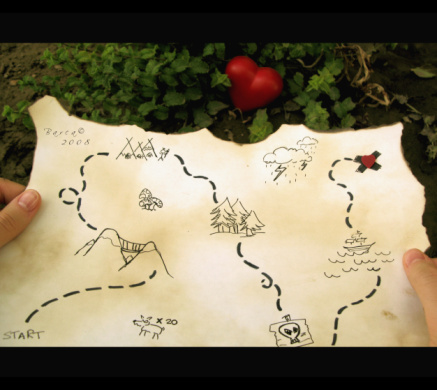
Maybe its one of those weird logical things that only make logical sense, but if I were going to an address that I don’t know – I will not ask directions from other people; as usually these directions go somewhat like “turn left after 2 lights, the 4th street turn right, after you see the school go for 2 more blocks then turn left”, and so on. More times than not in those situations, a key count of a light or street is overlooked, which leads to one getting lost. So to avoid those situations, one should search out the directions on Google Maps or MapQuest so that they can print out or write the directions – especially if you have days/weeks advance notice in knowing that you have to be at this specific location. It baffles me that some people who use web communications daily, do not rely on the web to solve a simple problem such as directions. People need to be self-reliant in solving life’s simplest problems, don’t rely on others solving your issues that you could’ve easily solved yourself with a little effort and time management. Step your game up!

 

88622572

Measuring Importance

Women have a hard time in understanding. Period. Wait, that was too ‘black & white’, maybe not ‘period’, because women have no problemo in understanding what is important to them – but lord help you for women trying to UNDERSTAND anything that DOES NOT relate or affect them (ooh, isn’t that ‘selfish’, lol). That is like trying to explain color to a man that was born blind, teaching a dog to speak several human languages, understanding the meaning of life – it is damn near impossible and will take years to accomplish. I don’t think there is more need to elaborate other than that women usually have a tendency (yes, strong stereotypes are being used) to only have concern for themselves, and to f— everything else, everyone, and there desires. So fellas, as I have said many times in tweets, posts, in relationships it seems that you got to sit on your knees, cup your genitals, give up your independence, brain, and pride to your woman – if you truly want to make her happy … (that was sarcasm). Stand up fellas, don’t let these birds peck at you; if you had fear before, get some courage you cowardly Lion – stand up.

Workplace Body Language Cues

This is for all those in the work environment, I am sure you have experienced a million times already. I can’t stand when people don’t pick up on body language cues that I drop, that indicate that: a) I don’t care to sit and ‘chit chat’, b) I have lost interest in the conversation, or c) I really don’t give a f— in engaging in this mindless dialogue. I usually drop cues such as backing away from them, turning my body away from them, begin typing on my workstation again – but it usually doesn’t work as they still talk; talking about what they did last weekend, what they will do this weekend, about the boss, blah blah blah blah. I have to blame myself for this, I have to rant on my behavior because I am a very good attentive listener. I give good attention cues such as nodding head, saying stuff like “oh really?”, “wow”, “ok”, “that’s good”, and so on. Essentially, I may be motivating them to talk more as they are picking up on my verbal responsive cues, and may be ignoring or not even noticing my body language cues … and they say that “Body Language speaks louder than Verbal Language”, well, not in the workplace environment, at least not for me.

.:: LiBM ::.

Euphemistic Styles

Subtle Punk’s

Euphemisms: The new way of insults, respectively

First, the title image probably has no real correlation with this subject (if it is, please comment), I just thought it was funny.  Now, Euphemisms are literal devices in languages; as it provides people to be genuine in the verbal manisfestations of their cognitions with regard for other’s sensitivity. In Laments terms, a euphemism is a substitution of an agreeable or less offensive expression in place of one that may offend or suggest something unpleasant to the listener. There are all kind of euphemisms from those of a sexual nature, to classism, to racism – all done subtly, and at times without one realizing what is truly being said. Some common and interesting euphemisms are:

“Enhanced Interrogation Technique”
– another term for torture

“Fertility Cente”
– an infertility centre

“Taking the Browns to the Superbowl”
– using the tooilet

“Salad Dodger”
– A more polite term for someone overweight

“Hard Gas”
– Soiling oneself.

“Richard Cranium”
– the short name for ‘richard’ + cranium (head); an insult


Designed by Scritch & Scratch

.:: LiBM ::.

Cheap vs Frugal

Cheap vs Frugal

Key Differences between the two, but often confused

A lot of my friends think that I am ‘cheap’, when I define myself as ‘cost-effecient’; I look for deals, before making purchaes I do my research & analysis of the pros and cons of the item, I aim to not shop impulsively, but only shop out of necessity. I am reluctant to tip at restaurants, I will try to stretch a dollar where applicable, I will avoid paying for parking in downtown Toronto where possible – even if it means walking a couple of extra blocks. So this is a clear distinction to all those lames that say we are ‘cheap’ when we are actually ‘cost-efficient’ (frugal), it is best to have us around so we can advise you out of debt, chumps!

Cheap
A miser or cheapskate is a person who is reluctant to spend money, sometimes to the point of forgoing even basic comforts. The term derives from the Latin miser, meaning “poor” or “wretched,” comparable to the modern word “miserable”.  Here are some interesting cheap people from the past:

Joseph Nollekens – Londoner generally considered to be the finest British sculptor of the late 18th century, he was also a notorious miser.

Charles Huffman was a miser from the 1950s in the U.S. He was found dead on a Brooklyn, New York street with no money in his pockets. The police traced him to a $7 per week room that was filled with bank books and more than $500,000 in stock certificates. He was characterized by Franz Lidz, in The New York Times, on October 26, 2003.

Frugal

Frugality is the practice of acquiring goods and services in a restrained manner, and resourcefully using already owned economic goods and services, to achieve a longer term goal.

Common strategies of frugality include the reduction of waste, curbing costly habits, suppressing instant gratification by means of fiscal self-restraint, seeking efficiency, avoiding traps, defying expensive social norms, embracing cost-free options, using barter, and staying well-informed about local circumstances and both market and product/service realities.

You may be frugal if you evaluate the following on a potential purchase:
Unit pricing ($ per pound, ounce or item)
Convenience
Shelf life (ability to store it)
Life expectancy
Versatility (does it have multiple uses?)
Functionality (is it as useful as they claim?)
Cost of maintenance
Cost and availability of replacement parts
Durability
Warranty or service plan
Taste
Strength
Quality of construction or assembly
Appearance
Safety risks
– There are other great tips of Frugality at:
http://www.frugal-living-freedom.com/frugal.html

Now, I am sure there are some cheapskates out there, and to be ‘cheap’ would subscribe one to some sort of obsessive compulsive disorder that would perpetually create a cycle of desires to horde money and stretch a dollar to nth degree. A reluctance to spend doesn’t define ‘cheap’; it merely shows that one is responsible and careful with their allotment of money so that they get the most value out of their hard earned money. Even when I am sitting in those lofty hills in the villa, deciding which of my many hybrida or diesel cars I will drive … I will still not tip the waiter!

.:: LiBM ::.

Sources:
http://www.frugal-living-freedom.com/frugal.html
http://en.wikipedia.org/wiki/Frugality
http://en.wikipedia.org/wiki/Cheap

Satisfaction vs Fun

Satisfaction vs. Fun

A physiological difference of sorts

When talking about motivation and the rewards of motivation, I think it falls in one of two categories: satisfaction and fun. They sound similar, but are not the same. Satisfaction can be defined as contentment; which is a state of being at ease in one’s situation – physiologically, there are not major changes in the immune system when one is exeriencing a ‘satisfying’ moment. However ‘fun’ produces an adrenaline rush that causes blood to flow all throughout the body and excites our senses. With ‘fun’ there is a stage of intense stimulation followed by an exhaustion period. To highlight the difference, I have created the following examples:

Satisfaction

Gardening

– dealing with the allergies, weeds, animals eating your flowers and vegetables is not a pleasurable experience, but I can see that the end result of the hard work of gardening can be rewarding

Home Renovations

– besides the fact that you may suffer some injuries or may staple some part of your appendages to a wall, the reward of doing your own home renovations is the increased value of your property and the feelings of accomplishment and success

Cooking

– there is a fine art to cooking; the boiling, the seasoning, steaming of a dish can be very theraupetic after a stressful day – and the reception of compliments and accolades of a meal well prepared can be very fulfilling (pun intended)

Kids

– the thousands of dollars they cost, the stress and anxiety, the endless cleaning up after their mess isn’t that much ‘fun’, but kids do bring out a rewarding factor to parents; as parents can witness the growth and evolution of their offspring right in front of their eyes.

Working Out

– the changing of your clothes, dealing with people who think its cool to walk around nude in changerooms, and the sweat and intensity involved doesn’t make working out at the gym fun, but the improved immune system functioning (cardiovascular, lower blood pressure/cholesteorel), weight loss, and muscle growth make it all rewarding.


Fun


Sports

– the rush of hitting the jump shot, tackling the running back, or beating a defender provides an adrenaline rush that not much other experiences can provide.

Gentleman’s clubs

– self-explanatory, I guess if one can’t understand this, then the ‘hands-on’ approach is necessary (pun intended – in some states and provinces only)

Romance

– See last explanation
Shopping (for women)

– beats me!!! I have no rational explanation

.:: LiBM ::.

Authority Figures and the Social Media World

Authority and the Social Media World

 
It may have been said best by Bertrand de Jouvenel:
“The phenomenon called authority is at once more ancient and more fundamental than the phenomenon called state; the natural ascendancy of some men over others is the principle of all human organizations and all human advances.”

All societies operate on the concept of authority; as some figure or body of government has the ability and power deliver punishment on individual(s). Since the Roman civilization, authority is used as a deterrence and an instrument of justice; punishing those that break the laws of a society. In contemporary society as it relates to the rule of law, an authority figure would be law enforcement, military, intelligence services – and as we have seen in certain countries, the use of power in punishing others can be very relenting, and even the legitimacy in the authority figures and its ideology can be questioned and revolted by a society (i.e. Iran). However, without a body to enforce the rules and order of a society, then chaos is sure to arise as man can not govern itself freely. There are several differing types of authority according to German Max Weber, they are Rational-legal, traditional, and charismatic.

Social Media Urban Context

“Modern societies depend on legal-rational authority. Government officials are the best example of this form of authority, which is prevalent all over the world.”, however this type of authority is not respected much by the growing industry of ‘Social Media’, as governments find it increasingly difficult to regulate the Internet – the most prime example is the government in Iran who have failed to block certain social media sites; as the people in that country have used technology, specifically the use of IP Proxies, to get around the government crackdown. In Western countries, governments try to establish rules and laws, however much of the enforcement is scattered and not effective as there are many socially unacceptable sites dealing with underage exploits.

“Traditional authority, which derives from long-established customs, habits and social structures. When power passes from one generation to another, then it is known as traditional authority”, as it relates to social media, this is a toss-up: on the one hand it seems that the Internet community on a whole has some group personality traits; groups will isolate those that don’t fit their site ideology, and sometimes delivering disparaging comments will make one very popular. So it can be said that the customs that we develop in the tangible world are being transferred to online interactions. However, the argument can be made that the sense of anonymity and impersonal nature of what the Internet provides, has created a crude and rude culture – that has always existed in the physical world, but the Internet has exacerbated such attitudes into behaviors.

“Charismatic authority is that authority which is derived from “the gift of grace” or when the leader claims that his authority is derived from a “higher power” (e.g. God or natural law or rights) or “inspiration”, that is superior to both the validity of traditional and rational-legal authority and followers accept this and are willing to follow this higher or inspired authority, in the place of the authority that they have hitherto been following. Some of the most prominent examples of charismatic authority can be politicians or leaders, who come from a movie or entertainment background”, couldn’t have been said any better. In this social media realm, many are titled an ‘authority figure’ just on their ‘swag’, their ‘charisma’. This is a falsity, and should be corrected as many people are being handed the magic wand of ‘authority’ when they have no real power other than their popularity – which in some cases can be very powerful in influencing masses. However, they can not really ‘punish’ people other through isolating other people – which can be just as damaging psychologically as a physical blow can be.

The follow-up to this will be a highlight of such ‘authority figures’ … hopefully it will teach us whom has the real power, and whom is just faking it!

.:: LiBM ::.

Unconfirmed Sources Confirmed

Verifying the Unverified Reports for Confirmation

The role of sources in a lightning fast news environment

With the whole aftermath of the passing of the King of Music (no, not ‘King of Pop’, King of Music mofo’s), on June 25, 2009, there will sure be a debate on the issue of ‘unconfirmed’ and ‘confirmed’ reports/sources. Like everyone, I started to receive txt msgs, Blackberry messages, tweets about Michael Jackson being hospitalized; so immediately I wanted validation, my first instinct was to tune to CNN. At CNN they had confirmed that he was hospitalized, in parallel, TMZ was reporting he had already passed via their ‘unconfirmed report’. The BBC, CBC, all rushed to change graphics to that he was ‘dead’, and they cited ‘unconfirmed reports’. However, CNN didn’t follow suit; they did mention the ‘unconfirmed report’, but they always followed up with “CNN has not confirmed”. At this time, BET was already dedicating 106 & Park to MJ, Fox News was saying he passed; all based on an ‘unconfirmed report’; now allegedly not from TMZ, but from the L.A. Times (where their site went down due to traffic).

Unconfirmed vs Confirmed

I deduce that an ‘unconfirmed report’ is little more than ‘hearsay’ or ‘gossip’; originating from someone that is not an ‘official’ or ‘professional’, or has not been validated by secondary and/or external sources. As like many, I was flipping news sources to see any variations and/or similarities in the coverage, then something happened that cemented why CNN can really stand by the moniker ‘The Most Trusted Name in News’, CNN’s I-hate-immigrant-workers Lou Dobbs personality chick had a live interview with the L.A. Coroner’s office that gave the official statement – confirming the ‘unconfirmed’. Of course, as we have all found out, the ‘unconfirmed report’ was accurate
This is important in an ultra fast paced news dimension of tweets, internet, and cable news where information travels lightning quick; one’s sources are paramount in lending validity. I am sure CNN felt mounting pressure to follow their cable news network peers, but doing so would of undermine their journalistic integrity – as I am sure for many news networks and websites, the goal was to get the information first versus getting the information that was correct & confirmed. I have a new respect for CNN as they have help protect the journalism community, as with life as it is with journalism, “A man is nothing without his word”, exchange the obvious with ‘news organization’ and ‘sources’.


.:: LiBM ::.

tan(009) – Broken earphones cost 5 cents in exams

Tangent 009 – 5 Cents a bag, phones in exams, earphones

5 Cents a bag

Before, it used to be certain grocery stores that would charge you 5 cents per bag; the tradeoff was that the grocery store offered lower prices and didn’t invest in things like food sampling, bagging your groceries, and the like. Now, all commercial stores imaginable from grocery to retail, now have to charge 5 cents per bag. It is really starting to become a nuisance as I will go to one of my regular stores, shop, and then get shocked when the cashier asks me if I want bags – then I do the usual, ‘Oh yeah, I forgot’ thing, and privately cuss to myself that this is asinine.

Phones in Exams

I am sure that everyone can relate to an exam situation in school where the prof said “everyone turn off or silence your phone”, and half-way through the exam, a loud annoying polyphonic sound emits from some student. The student tries to coyly turn it off, but it never works, and the class is disrupted. Whenever I go into class, exam or not, I have the common sense to say to myself, “ok, its time to turn off or put the phone on vibrate”. I don’t understand how other people can simply forget this common act of courtesy and decency. You have to be an idiot or a moron to not have the foresight that your phone might ring in class, and it would be wise to check before you enter class. Simple respect for the prof and your classmates, you lame.

Earphones

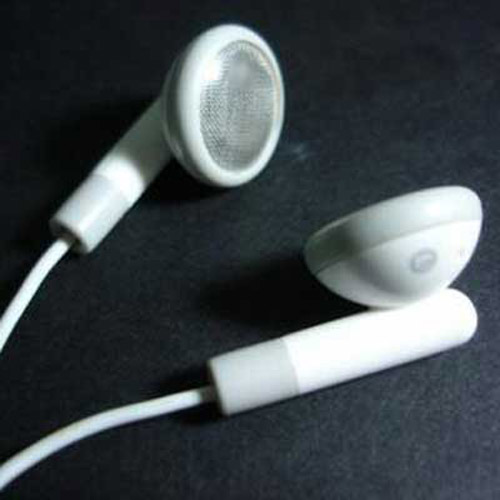
The earphones for your iPod/mp3 player will never function properly for more than 1 year; I think there is an exact science to it. Earphones are designed to only last a few months before one side of the earphones ceases to work properly – one side may not produce sound at all, or it may produce a reduced sound. I have had walkmans, Discmans, various iPods, and over time the earphones will crap out. Always. I never thought of investing in expensive earphones, but I may just have to pay the price to enjoy ‘ear to ear’ continuous sound.

.:: LiBM ::.

Cheap E-Way

Cheap E-Way

Ways to save and cut back

Most of this is logical (hopefully), but in a tight economy, there are many ways that people can save their money and cut back.

Write-Off

Register a small business. Do it. Regardless if you have no idea of what product you plan to sell or what service you want to offer. Then, any activity/purchase you do for your business, can be a write-off – transit fare to meet clients, food purchases, clothing, wireless/internet expenses … the possibilities are endless.


Shop at a Dollar Store

– they have the everyday household items for $1, body spray deodorant, binders, lotions, drinks – and all the name brands; no ‘Acme’ or generic never-heard of brands


Bring your own beverages to work

– let’s do the math; let’s say you bought a Coca-cola beverage everyday at your work cafeteria for $1, 5 times a week. Over a month period, that equates to $20. If you went to the grocery store, and picked up a 12 pack of coca-cola for $5.99, you would save around $.50 per day rather than buying it at the cafeteria.


Cloud Computing

– This is working and storing information into the cloud (essentially a server) where you can access the data from any machine; no longer being restricted to a specific computer. Google offers many free cloud services like ‘Google Docs’ (wordprocessing, spreadsheet, powerpoint) and if you need a desktop software suite, Sun Office has a bunch of applications that are compatible with Microsoft and the best thing is that it is FREE.


.:: LiBM ::.

Mr. Nice Guy S.E.T.

Favor for a Favor

The Social Exchange Theory of Humanity

It is refreshing to see Bill and Melinda Gates giving millions of dollars to education and anti-poverty programs across the world, of course, Bill Gates is a billionaire after founding the Microsoft corporation in the 80’s, and is now focusing much of his attention to philanthropy causes. In a sense, one can say that Bill is being very altruistic as he is helping others without any concern for himself; or how he may profit off of his good deeds and actions. Not many people are altruistic – as many people may help, but they want something in return; whether it is recognition, accolades, or a future reward. With this definition, corporations that give back to communities/charities do so with motivations that focus on future rewards from government and businesses. Instinctively, humans operate on a Social Exchange Theory, which is to say that all human relationships are formed by the use of a subjective cost-benefit analysis and the comparison of alternatives, it is a process of negotiated exchanges between parties. What motivates one to do something for others is really what they expect to benefit from the process.

Some take pleasure in simply helping others


Designed by Carts

Some help others to appease others and to avoid a future threat


Designed by Stamatisgr

Some help others to increase their status to others


Designed by Phenix Land

Some help others to elicit a similar/greater favor from such individual in the future


Designed by Brown One

So based on these premises, I can’t understand how women time and time again will say “Oh, he is just a nice guy”, “he does that for me all the time”, “oh no, he doesn’t want anything in return”. I laugh at these women; as they are either really stupid, really clever, or lie somewhere in the abyss (in the middle). Don’t get me wrong, in any relationship (friendship, love, familial) there has to exist some cost/benefit exchange for the relationship to flourish; and both parties must feel that the exchanges and rewards are mutual/similar in intensity – or one party will feel ‘slighted’, and will develop the thought that they are being ‘used’. That’s why (regrettingly) we men must go to the girly type activities with our girlfriends; just as they must put up with our sports watching, athletic building, video game playing habits.

So just remember that the Social Exchange Theory really governs and regulates our behaviors and actions towards others. Since I don’t think that much of the people in the 15-34 demographic have much altruistic attitudes …

.:: LiBM ::.

Abstracted Fear


Designed by dholl

Priming Fear

How we interpret ‘fear’

Fear is an emotional response to threats and danger. It is a basic survival mechanism occurring in response to a specific stimulus, such as pain or the threat of pain. Fear can be described with different terms in relation to the degree of fear that is experienced. It varies from mild caution to extreme phobia and paranoia. Fear is related to a number of additional cognitive and emotional states including worry, anxiety, terror, horror, panic, and dread. As an individual emotional state, fear can affect the unconscious mind, where it can become manifested in the form of nightmares. Fear may also be experienced within a larger group or social network. In this way, personal fears are compounded by social influence to become mass hysteria – exactly what the media does. So I thought it would be fitting to show some several emotions and feelings that produce fear and how the media uses these tactics to deliver news:

Loneliness

by lonelypierot

Life seems to be about connections and relationships with family, friends, co-workers, lovers. The media does a good job of promoting this basic human ‘need’ of ‘not being lonely’ – with relationship studies, tips, and tricks.

Aggression

by Uribaani

Always makes for a good news stories; news channels love showing protestors clashing with police, protestors getting arrested, throwing rocks – makes the protestors seem like the only way they can vent their frustration is through angry methods.

Uncertainty

by Silvair

Lou Dobbs is classic for this, he will say something like “China just increase their defense budget by X amount of dollars”, and then questions their motive for doing such – creating uncertainty in the mind of the viewer of what China may be planning to do. When news channels report stories that seem to be very vague, they are almost doing it so the viewer can piece together the ‘implied correlation’, they create casual dots that force the viewer to draw the connections.

Conspiracy

by b0nkers
News channels always love a good conspiracy story because it allows the viewers imagination to run wild. Imagine, just saying “talks were held between government officials from Iran and North Korea”, the automatic response thought turns to negative thoughts of weapons of mass destruction – when it could be trade.

Only through education, enlightenment, and empowerment can we see through the ‘fear’ and face reality.

.:: LiBM ::.

tan(008) – Medicine Toast with the Green

Hyrbrid Parking, burning toasters, self-realization

Sorry to go on a tangent but …. and I don’t spot the danger in the pic above

Green Parking Spaces

There are some grocery stores that have taken upon themselves to push the idea that certain parking spots will be reserved for ‘green cars’; specifically hybrid vehicles such as the Toyota Prius. I guess this kind of hurts as I recently had a Toyota Prius, lost it in an accident, but now I have a Diesel vehicle – which is not a hybrid, but burns the diesel fuel cleanly. My gripe with this policy may be biased; especially since I did not have a chance to utilize the ‘luxury’ of a shorter walk to the grocery stores. I wonder what would happened if anyone parked a non-hybrid vehicle in those spots – what is the worse that could happen? Its not like these spots hold the same weight as disabled parking spots – as you can actually get a real, expensive ticket for illegally parking there. I will test out the theory.


Toasters

I’m not a really big fan of toasters and/or toast foods, but when I do use a toaster, I feel I encounter the same problem repeatedly – I always end up burning my fingers trying to grab out the bread OR I have to use a knife to pull the bread out of the toaster. Can’t they design the toaster in a way where we won’t have to dig too deep to try to pull out the bread? Or make some adjustable handles so that the sides of the toaster can easily open up? Its asinine that I have almost burned my hand three times in the past week just for trying to pull out some bread, SMH.


Good Medicine

First, sorry for the bad picture.  But anyways, I love it when people reach a state of realization of something that they complained about you, but they themselves are now exhibiting that same behavior that made them so mad and vocal (i.e. like when your girl hates on you for being sarcastic, but yet she does the same thing). They get real quiet, like the opposite of a barbershop, like what happens when a minority steps into a room and is the minority – a heightened sense of self-awareness. All that you complained about, griped, moaned, about someone’s behavior is not so foreign anymore – it now feels like a natural reaction to natural events. Any lack of comprehension is now clarified like a crisp clear day – and it only took a dip in the ocean to understand, as the best medicine to understand something probably needs experience. Rhetoric is nothing and I guess can not be fully understood by most without some practical experience. I am sure we have all been in this experience as either the recipient of the realization or the viewer – either way, its not good to ‘revel’ in the feeling, but keep it as a wild card, to pull out when that same individual wants to return to primitive ways.

.:: LiBM ::.