Subscribe to "Life In B Major: The Nerban Perspective" by Email

Dec 09 2009

Kobe Bryant Fan Art

Published by d dot b under Cre8ive Abstract, sports

Kobe Bryant Fan Art

Love him or hate him, he gets it in

Love him or hate him, Kobe Bryant seems to be that dude that can reach in his bag of tricks and pull out something amazing.  Anyone one with thousands of sites and blogs dedicated to his demise must be doing something right, right?  This L.A. Laker perennial All-Star pulled off a ridiculous shot last week against Duane Wade (clip below), so I figured that you gotta give a player his due when he gets it in – and season after season, Kobe Bryant has lifted the NBA out of the ‘Jordan-less’ era, and I am sure that David Stern isn’t complaining with the revenue the league is bringing in.

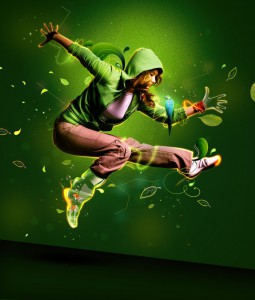
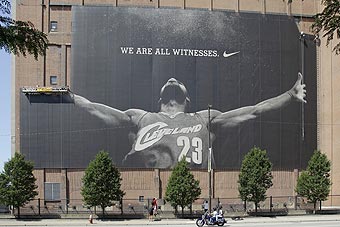
So here is some Kobe Bryant fan art that shows off his athleticism and that smile that is warming to some on the West Coast, but is hated by most.

Designed by Man of Inspiration

Designed by Diztrickt

Designed by K1Illuminati


And here is Kobe doing what he does best

No responses yet

Dec 06 2009

Best Tiger Woods Parodies and mashups

Poor Tiger

This story keeps unfolding and getting worse for Tiger Woods, but with most public tragedies come some creative humor – at the expense of some. The ‘mashup’ is the new trend, so the following are some funny mashup videos as people have likened Tiger to famous/infamous cheaters such as Shaq, Kobe, Chris Brown, Mike Tyson, Bill Clinton … and the list goes on.

1-900 Cheater

Feat. Tiger Woods, Shaq, Chris Brown. Based of Jay-Z’s classic ‘1-900 Cheater track’.

Eye of the Tiger

Chinese TV Re-enactment

This has to be the funniest animation and most insulting to Tiger Woods – they have him crying like a bitch, but funny.

2 responses so far

Jul 03 2009

Satisfaction vs Fun

Published by d dot b under Family, Health, Logic, Love

Satisfaction vs. Fun

A physiological difference of sorts

When talking about motivation and the rewards of motivation, I think it falls in one of two categories: satisfaction and fun. They sound similar, but are not the same. Satisfaction can be defined as contentment; which is a state of being at ease in one’s situation – physiologically, there are not major changes in the immune system when one is exeriencing a ’satisfying’ moment. However ‘fun’ produces an adrenaline rush that causes blood to flow all throughout the body and excites our senses. With ‘fun’ there is a stage of intense stimulation followed by an exhaustion period. To highlight the difference, I have created the following examples:

Satisfaction

Gardening

- dealing with the allergies, weeds, animals eating your flowers and vegetables is not a pleasurable experience, but I can see that the end result of the hard work of gardening can be rewarding

Home Renovations

- besides the fact that you may suffer some injuries or may staple some part of your appendages to a wall, the reward of doing your own home renovations is the increased value of your property and the feelings of accomplishment and success

Cooking

- there is a fine art to cooking; the boiling, the seasoning, steaming of a dish can be very theraupetic after a stressful day – and the reception of compliments and accolades of a meal well prepared can be very fulfilling (pun intended)

Kids

- the thousands of dollars they cost, the stress and anxiety, the endless cleaning up after their mess isn’t that much ‘fun’, but kids do bring out a rewarding factor to parents; as parents can witness the growth and evolution of their offspring right in front of their eyes.

Working Out

- the changing of your clothes, dealing with people who think its cool to walk around nude in changerooms, and the sweat and intensity involved doesn’t make working out at the gym fun, but the improved immune system functioning (cardiovascular, lower blood pressure/cholesteorel), weight loss, and muscle growth make it all rewarding.


Fun


Sports

- the rush of hitting the jump shot, tackling the running back, or beating a defender provides an adrenaline rush that not much other experiences can provide.

Gentleman’s clubs

- self-explanatory, I guess if one can’t understand this, then the ‘hands-on’ approach is necessary (pun intended – in some states and provinces only)

Romance

- See last explanation
Shopping (for women)

- beats me!!! I have no rational explanation

.:: LiBM ::.

No responses yet

Jun 01 2009

A model is to an example as

Published by d dot b under Popular Culture, Social, sports

Sports Role Models

The sports athelete is a tough job; especially if you are very good at what you do. With success, more money and more responsibilites come with the territory as money is tied to image, image is tied to sponsorship contracts, and public perception is easily sculpted from one’s glorified actions. Even more importantly though is how youth see’s sports figures – because it is the youth that idolizes these stars and will mimick their behavior. Thus, it is advantageous for these athletes to be socially responsible so that they become a role model as opposed to an ‘example of’. Role models are positive, are a good pattern to model youth’s behavior after (on & off the court/field); in contrast, an ‘example of’ character is one whose on & off the court behavior is frowned upon in society, and these individuals are usually known as the ‘bad boys’ and have run-ins with local and federal law enforcement (Vick!). Enough preamble, let’s get into it:


A model is to an example as …

Jerry Rice is to Michael Vick


Designed by: Mike Walchuk


Designed by: Sapoman

We all know the story of Michael Vick’s foolishness …


Michael Jordan is to Charles Barkley


Designed by: austin671


Designed by: evolutionsky

Probably not a pic from, but this must be the press conference where he explained that he had the get the killer brain from the girl in Phoenix …


Emmitt Smith is to Terrell Owens
Designed by: dzmond


Designed by: kelmo


Muhammad Ali is to Mike Tyson


Designed by: el-douglas


Designed by: ucarts

Mike Tyson has went from being a ruthless boxer to now showing some warmth, his latest movie I hear is actually pretty good.
.:: LiBM ::.

No responses yet

May 06 2008

Major Taylor: An Unknown Great, Cyclist

Published by d dot b under Health, Social

Major Taylor
A Great Unknown

From Wikipedia:

Marshall Walter (“Major”) Taylor (November 26, 1878–June 21, 1932) was an American cyclist who won the world one-mile track cycling championship in 1899, 1900, and 1901.

Taylor was the second black world champion in any sport, after boxer George Dixon. The Major Taylor Velodrome in Indianapolis, Indiana, and a bicycle trail in Chicago are named in his honor. On July 24, 2006 the city of Worcester, Massachusetts, changed the name of part of Worcester Center Boulevard to Major Taylor Boulevard. His memory is honored not only for his athletic feats, but for his character. Taylor was a devout Christian who would not race on Sundays for much of his career, making his success all the more remarkable.

Taylor was born to a large family on a farm in rural Indiana to parents Gilbert Taylor and Saphronia Kelter, who had migrated from Louisville, Kentucky. He began as an entertainer at the age of thirteen. He was hired to perform cycling stunts outside a bicycle shop while wearing a soldier’s uniform, which resulted in the nickname “Major.”

As an African-American, Taylor was banned from bicycle racing in Indiana once he started winning and made a reputation as “The Black Cyclone.” In 1896, he moved from Indianapolis to Middletown, Connecticut, then a center of the United States bicycle industry with half a dozen factories and thirty bicycle shops, to work as a bicycle mechanic in the Worcester Cycle Manufacturing Company factory, owned by Birdie Munger who was to become his lifelong friend and mentor, and race for Munger’s team. His first east coast race was in a League of American Wheelmen one mile race in New Haven, where he started in last place but won. In late 1896, Taylor entered his first professional race in Madison Square Garden, where he lapped the entire field during the half-mile race. Although he is listed in the Middletown town directory in 1896, it is not known how long he still resided there after he became a professional racer. He eventually settled in Worcester, Massachusetts (where his nickname was naturally altered to “The Worcester Whirlwind”), marrying there and having a daughter, although his career required him to spend a large amount of time traveling, in America, Australia, and Europe.

Although he was greatly celebrated abroad, particularly in France, Taylor’s career was still held back by racism, particularly in the Southern states where he was not permitted to compete against Caucasians. The League of American Wheelmen also excluded blacks from membership. During his career he had ice water thrown at him during races and nails scattered in front of his wheels, and was often boxed in by other riders, preventing the sprints to the front of the pack at which he was so successful. In his autobiography, he reports actually being tackled on the race track by another rider, who choked him into unconsciousness but received only a $50 fine as punishment. Nevertheless, he does not dwell on such events in the book; rather it is evident that he means it to serve as an inspiration to other African-Americans trying to overcome similar treatment. Taylor retired at age 32 in 1910, saying he was tired of the racism. His advice to African-American youths wishing to emulate him was that while bicycle racing was the appropriate route to success for him, he would not recommend it in general; and that individuals must find their own best talent.

He was reported to have between $25,000 and $30,000 when he returned to Worcester at the end of his career, but lost it to bad investments (including self-publishing his autobiography), persistent illness, and the stock market crash. His marriage over, he died a pauper in Chicago’s Bronzeville neighborhood, survived by one daughter. In 1948 his body was moved to a marked grave in a more prominent section of Mount Glenwood Cemetery thanks to funding by Frank Schwinn. A monument to his memory is being planned for Worcester, and even Indianapolis has finally confronted its racist past by naming the city’s bicycle track after Taylor.

—–
Commentary:

Imagine getting respect for your skills and ability around the world, but at home, such skills are not even acknowledged, and such, you are treated inferior. I never heard of Major Taylor until recently, as it appears to be that he is a great black hero that is unknown by many … thus, spread the knowledge.

Peace

.:: d.b

2 responses so far

Next »