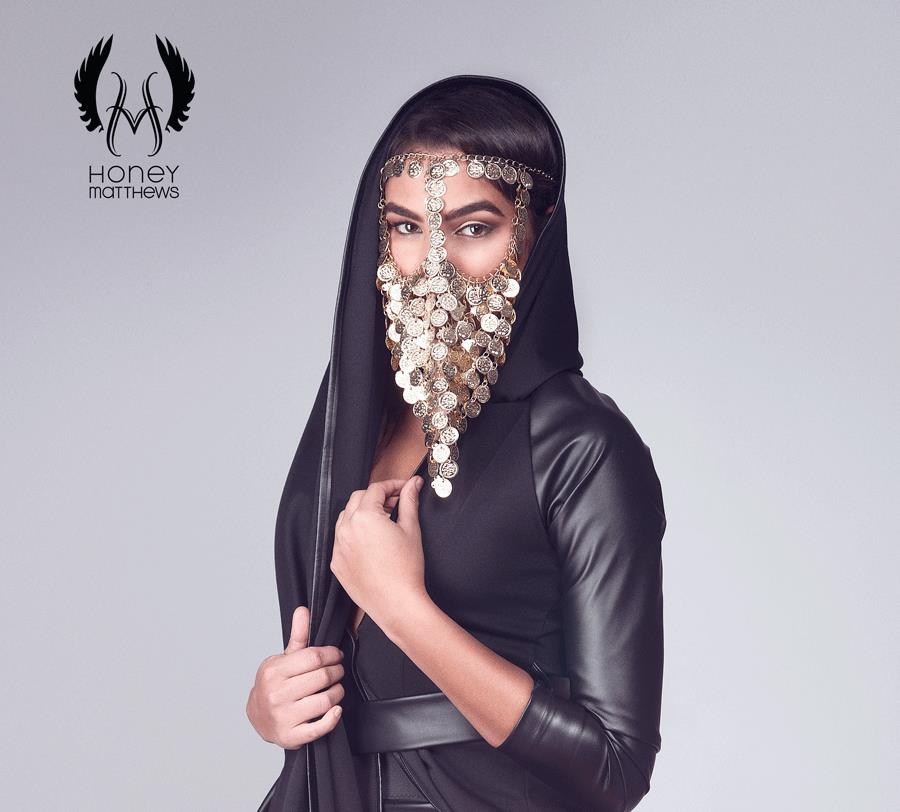
Editing & Production work I did for Honey Matthews Designs.
Check out more designs & fashions for Honey Matthews at www.honeymatthews.com
.::LiBM::.
Editing & Production work I did for Honey Matthews Designs.
Check out more designs & fashions for Honey Matthews at www.honeymatthews.com
.::LiBM::.

Timbs, Timbos or Timbies
The utility boot that was originally designed for hiking and mountaineering, is probably more popular for its usage and wear in hip-hop culture. Since the mid 90’s, the Timberland boots have been a staple in hip-hop culture – from the young Mobb Deep due of Havoc & Prodigy walking Queens, NY in their Timbs in Shook Ones, to the current female video vixens that rock cute pink Timbs, Timberland boots help to define the hip-hop era. You can simply look at a Timb and know what year, or what trend was popping around that time. I always wanted a Timb in high school, but couldn’t afford the high price – I know have one, and I always revert back to it for snow/rainy weather. You can tell the success of a product when the good ‘ol bootleggers in China try to start selling knock-offs, and when there are many imitation brands (pointing at YOU ‘Lugz’, are they still around?).
The Custom Joints
With a popular brand, comes the demand for custom designs to your product – mostly by third-party sources. Here are some interestign ones:
The Dead Presidents Timb

.
.
The Designer Timb

.
.
The Louis Vuittion Timb

.
.
The Scottish Timb

.
.
The Full House Timb

Overall the Timberland line has flourished in the past 10 years or so opening many retail stores throughout North America and the U.K., and have grossed yearly revenue sales that have climbed into the billions. Another brand that has benefited off of hip-hop culture – hope they give back.
.:: LiBM ::.

Some fresh fashions and tech gear for the Nerbans and Nerbanettes for this holiday season – from the highly techie stuff to the cool gear. You can be a nerd with style!

$99 via TigerDirect

$64 via KarmaLoop

$59 via Dr Jays

$169 via KarmaLoop

$26 via KarmaLoop

$96 via KarmaLoop
.:: LiBM ::.

Another installment in the series of ‘Buying Yourself a Personality’, which is a quick way for one to absorb a personality via the purchase of certain items; in this series, we focus on the popular high-end luxury brand Gucci. Essentially, Gucci is a ridiculously priced luxury fashion line that makes everything from handbags, purses, suits, pants, and other items. Its distinctive pattern is world renowned and easy to recognize – which has been problematic for Gucci as now it has to deal with bootlegging and the black market of its products. It is estimated that the bootlegging of Gucci nets close to $500 million dollars annually. Gucci has a crack team of lawyers to pursue the bootleggers, but they are far outnumbered.
Anyhow, it is important to note that Gucci is only found in high-end retail stores – so if you are buying a Gucci shirt at the local swap meet or flea market, and you are paying close to a $100 for it, you are being ripped off. Or, you are buying it to fill a need to be seen as ‘wealthy’ and/or one with a high SES. You are doing it to seem ‘cool’, to fill some void. But, you got to realize that this is not the answer – spend your money wisely, please. Especially to my black people who go to some crazy and extraodinary lengths to don Gucci attire. Some even are so crazy with it that they outfit their whole vehicle with Gucci lining and upholstery. I guess when you have some money, no financial planner, you can really do some stupid things – primarily the things that do nothing to raise the value in your assets. With that said, here are some ridiculous Gucci designs.


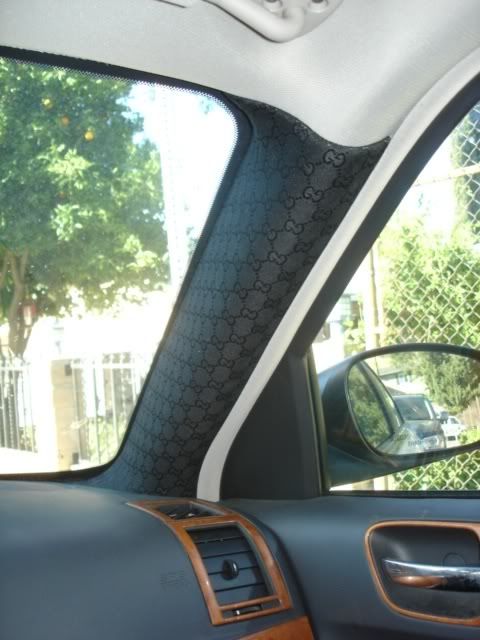
Some people will pay hundreds, even thousands of dollars for just the Gucci fabric – which people, is just a flipping pattern! But, maybe I shouldn’t get all ‘bent out of shape’, as they are buying more than just a cheap fabric made in China, lol.
I had neither shoes while I was growing up, but the impact on hip-hop/urban culture was definitely felt as if you were a kid, and somehow you convinced your mom to buy you a pair of these over-priced sneakers – you were the man. Well, at least you better be, because from coast-to-coast, nation-to-nation, youth were being jumped/jacked/robbed of their footwear. Thus, when something as an increase in youth robberies; related to a particular shoe, then the shoe reflects a definitive era in our society, and becomes a part of our collective culture… anyhow, enough of the preamble, onwards to pics and video:

The original Reebok Pump was made as a collaboration between Reebok’s Paul Litchfield and industrial design firm Design Continuum. It was released in 1989, as a basketball high-top shoe. It was the first shoe to have an internal inflation mechanism that regulated a unique fitting cushion in the upper tongue. The shoe was quite expensive compared to other retail athletic shoes at the time. It became something of a status symbol on urban basketball courts and eventually in suburban high schools.
After the success of the basketball shoe, Reebok designed pump shoes for football, tennis, and track. Some models used a standard CO2 cylinder instead of the pump for weight considerations.

Reebok Pump Commercial from Steve Fuller on Vimeo.

The Air Force 1 was produced in 1982 and discontinued the following year. It was re-released in 1986 with the modern italic Nike logo with a Swoosh on the bottom on the back of the shoe. Little has changed to the Air Force One since its creation in 1982, although the original stitching on the side panels is no longer present in modern versions of the shoe. Since then, over 1,700 color variations have been produced, bringing in an estimated 800 million USD/year in revenue. The selling of the Air Force Ones online by certain retailers is prohibited by Nike who has restricted supply of the sneaker.


Nike Air Force 1 – Crafting Perfect One from tenk on Vimeo.
Obviously Nike won this battle as the ‘Air Force 1’ shoe remains a cultural staple as many rappers have referenced and even made songs about it (i.e. Nelly and his shameless song ‘Air Force 1). The Reebok Pump did not have the longevity as the Air Force One did, but it still remains as an advancement in shoe technology …. whatever that is worth.
.:: LiBM ::.
sources:
http://en.wikipedia.org/wiki/Air_Force_1_(shoe)
http://en.wikipedia.org/wiki/Reebok_Pump

Past and Present … Presently ….
Here is a bit of a History Lesson of where this ‘Hipster’ Fashion and culture has come from … and SHOCKINGLY, it comes from the Black Community … (that is sarcasm)

1940s-1950s
“Hipster” derives from the slang “hip” or “hep,” which are derived from the earlier slang “hop” for opium. The first dictionary to list the word is the short glossary “For Characters Who Don’t Dig Jive Talk,” which was included with Harry Gibson’s 1944 album, Boogie Woogie In Blue. The entry for “hipsters” defined it as “characters who like hot jazz.” The 1959 book Jazz Scene by Eric Hobsbawm (using the pen name Francis Newton) describes hipsters using their own language, “jive-talk or hipster-talk,” he writes “is an argot or cant designed to set the group apart from outsiders.” Hipster was also used in a different context at about the same time by Jack Kerouac in describing his vision of the Beat Generation. Along with Allen Ginsberg, Kerouac described 1940s hipsters “rising and roaming America,… bumming and hitchhiking everywhere… [as] characters of a special spirituality.”

1990s and 2000s
In the late 1990s, the term started to be used in new, sometimes mutually exclusive ways. In some circles it became a blanket description for middle class and upper class young people associated with alternative culture, particularly alternative music, independent rock, alternative hip-hop, independent film and a lifestyle revolving around thrift store shopping, eating organic, locally grown, vegetarian, and/or vegan food, drinking local beer (or even brewing their own), listening to public radio, and riding fixed-gear bicycles.
In 2003 Robert Lanham’s satirical book The Hipster Handbook described hipsters as young people with “… mop-top haircuts, swinging retro pocketbooks, talking on cell phones, smoking European cigarettes,… strutting in platform shoes with a biography of Che Guevara sticking out of their bags.” Hipsters are considered apathetic, pretentious, and self-entitled by other, often marginalized sectors of society they live amongst, including previous generations of bohemian and/or “counter-culture” artists and thinkers as well as poor neighborhoods of color.
Gavin Mueller’s article “Hipster or Not?” for Stylus Magazine (2004) wrote that “… hipster lifestyle is reduced to a pose, a pretense” which involves”…”a hipster costume, worn to appear “cool”, a liberal arts education, and so on. He claims that the term “‘Hipster’ is far too vague and broad to have any semblance of essential meaning”.
In 2008, Utne Reader magazine writer Jake Mohan described “hipster rap,” “as loosely defined by the Chicago Reader, consists of the most recent crop of MCs and DJs who flout conventional hip-hop fashions, eschewing baggy clothes and gold chains for tight jeans, big sunglasses, the occasional keffiyeh, and other trappings of the hipster lifestyle.” He notes that the “old-school hip-hop website Unkut, and Jersey City rapper Mazzi” have criticized mainstream rappers who they deem to be poseurs or “… fags for copping the metrosexual appearances of hipster fashion.” Prefix Mag writer Ethan Stanislawski argues that there are racial elements to the rise of hipster rap. He claims that there “…have been a slew of angry retorts to the rise of hipster rap,” which he says can be summed up as “white kids want the funky otherness of hip-hop… without all the scary black people.”
Comment:

I don’t mind the Hipster fashions for the women, but when the Hipster fashions for the men look like the same fashions for the women; then there is a problem – loosen up the jeans fellas.
Sources: http://en.wikipedia.org/wiki/Hipster_(1940s_subculture)
http://en.wikipedia.org/wiki/Hipster_(contemporary_subculture)
I must be having a mental writing block, or trying to fill the space between posts, or I must be busy – either or, that shouldn’t diminish the fly gear that is available out there for consumption. Here are some fresh looks from the site www.karmaloop.com – living up north, there customer service and shipping policy is on point, so I am sure state side it is even better (hopefully).

The Asher Roth College Tee
$20.00

The Lights Out Tee by DGK
$20.00

The Fallen Soldiers Tee by DGK
$20.00


The Camp Pack On My Back Tee by LRG
$28.00
.:: LiBM ::.
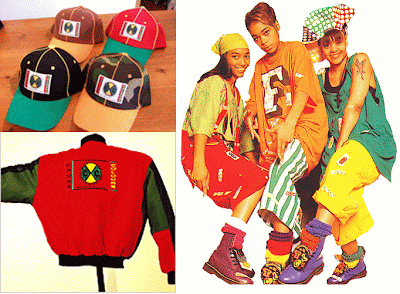
Defining an ERA or ERROR, a sign of the 90’s
Whether it was just a sign of an era or an error of the times, these brands defined the early 90’s for awhile. Looking back at the lines, esepecially with Cross Color, didn’t anyone tell them to look at a basic color wheel? A color wheel would of shown what colors do not match, but I guess that was a mute point since Cross Color had a cultural significant meaning behind it (wiki them to find out). I would say that LRG (Lifted Research Group) is the Cross Color of today; in terms of making clothing with political and social messages – but LRG looks much better than Cross Color ever did (see comparison below).
With L.A. Gear, they were a staple when they launched the shoes that lit up; every kid and teenager wanted to have lights flash everytime they walked. For awhile, they were giving Nike a run for their money, but the downfall of L.A. Gear may be attributed to over saturation and overall tackiness of the ‘shoes that light up’. In the end though, L.A. Gear still survives, and even still makes some shoes that light up. In their prime, they even had the late great Michael Jackson endorsing their shoes.

// Cross Color Jeans:
Cross Colours is a clothing brand launched in 1989 by Carl Jones. Launched on the premise of producing “clothes without prejudices” Cross Colours helped establish a fashion market based around black youth. The clothing was used to broadcast political and social messages.

// L.A. Gear


.:: LiBM ::.

Designed by: creatyves
Not to go on a tangent but …
Year/Month/Day
There exists the ISO: The International Standards Organization. There primary role is to place standards for certain processes, services, and products. In the insurance, medical, financial, and educational fields there are thousands of errors that occur due to the misreading and/or misunderstanding of Date fields. For the date fields they can go Year/Month/Day, Day/Month/Year, Month/Day/Year, and with the latter two, you can only really know the format if the Month/Day or Day/Month has a number greater than 12. And every organization has their own date format – why? Could there not be a standard universal agreed upon format that everyone followed? For some, its always a mental game of trying to figure out what the format is, and its just really annoying and unnecessary.

Dragging Feet
In the literal sense. I hate when people at work or the mall or the street are walking and drag their feet on the ground. They make a unique annoying sound due to their lazy limbs not being able to take full steps off the ground. Is it really that hard to take your punk a– feet off the ground and walk properly? These lames, man, you can hear coming a mile down the road as the graze, rub their feet barely off the ground – you know if you had somewhat decent shoes, you would take more pride and conserve the grip on the sole for your shoes. Chumps.

Designed by: frcarneiro
Shell Toe Adidas
This will be quick and sweet. Adidas makes some very simple and clean shoes, I have several pairs that I have accumulated over the years – such as the shell toe (I have at least 3 pairs, all different colors). But why are Adidas shoes designed for the flat-footed individual? Can anyone explain to me the advantages of that? The advantages of designing a shoe that many people do not fit? The natural curvature of the foot is arced and rounded, not flat. I don’t have any more to rant about concerning this; Puma, Nike, Reebok all have shoes that are designed for the foot’s natural arc, and I don’t know of them to have any flat-footed shoes.
.:: LiBM ::.

Ashy to Classy
Jay-Z makes it into Vogue magazine
The August issue of Vogue magazine will feature black models and entertainers as the popular Italian magazine has came under fire in recent years for not representing black models in their magazines. Jay-Z is one of the feature articles in the magazine and it is really big that Jay-Z from the Marcy projects in Brooklyn New York can rise from the gutter to the pages of the exquisite Italian vogue magazine. Looking at the pictures, Jay-Z can be the poster child for what ‘mature hip-hop’ looks like ….


The Vogue magazine should drop sometime in July 2008 and will not only featuring Jay-Z, but Naomi Campbell, Tyson Beckford, Toccara, and other black models. Vogue gets a ‘kudos’ for at least attempting to open its doors to black models in their magazines, but lets see if they can keep it up.
.:: d.b ::.

Deja vu
When remembering the past is inappropriate I guess …
Is this wrong? I’ll explain a little story about being thoughtful and showing good memory. One time at a club I saw a good lady friend, lets label her ‘Stacy’. The last time I saw Stacy was at a fashion show that she was performing in. At that time, Stacy was wearing a smashing outfit that was very radiant; I commented on it as I give respect and adulation.
Now at this lounge, which was around 2-3 months after the fashion show, I saw Stacy with the same outfit. My memory clicked and remembered where I had seen the outfit. Thus, I approached Stacy in the lounge and commented on her outfit again, and referenced that I LIKED her outfit, and I commented that she had worn the same outfit at the fashion show – in a non-disrespectful way.
Apparently, this was a NO-NO. As I came to find out later that Stacy was extremely upset about my remarks and she called me all kinds of foul-mouthed names. Stacy’s friends were shocked, appalled, and disgusted that I said such things as apparently, women take things like that seriously …. ah, well as B.I.G. said it:
“If I said it I meant it, bite my tongue for no one!”
– peace